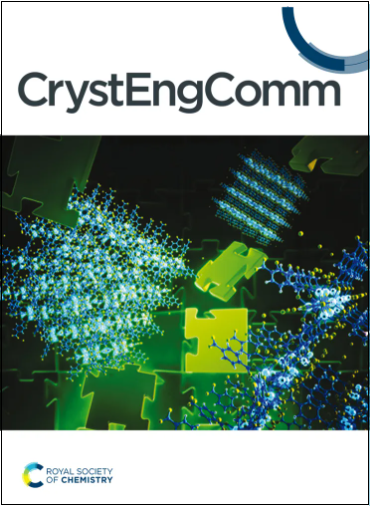
A good understanding of the solid-state properties of drug molecules is essential to drug development. Mirabegron is a first in class β3-adrenoceptor agonist, marketed as a free form practically insoluble in water. Its hydrochloride salt has high hygroscopicity and low solid form stability.
In this paper, Veranova Scientists, Cristina Balogh, Boe Claybourn, Thierry Bonnaud, and Mateusz Pitak explore a new, more stable, edisylate salt of mirabegron, giving an overview of of its polymorphic landscape.
The single crystal structures of a family of monohydrated, hemihydrated, and an anhydrous forms of the edisylate salt are presented for the first time, as well as a solvated 1,4-dioxane form. The stability limits of the hydrated family and dehydration/rehydration conditions were studied by variable humidity powder X-ray diffraction (PXRD), variable temperature PXRD, gravimetric water absorption and thermal analysis. The interpretation of these crystal structures provided insight into the possible desolvation mechanism between these forms. The loss of the water molecules and their structural functionality is compensated by the structural changes of the mirabegron molecules and rearrangement of the hydrogen bond network.
Further polymorphism investigations of the salt revealed a second set of closely related structures formed by hemi-solvates from 1,4-dioxane, 2-propanol, 2 methoxyethanol and THF as well as a second anhydrous form. Read the paper in Royal Society of Chemistry’s CrystEngComm journal to find learn more.
Read paper in CrystEngComm journal